Which Solar Panel Is Best? 2026 Guide
Confused about solar panels? Learn the difference between Bifacial vs Monofacial panels and TOPCon vs PERC cell technology. Simple guide for Indian homes.
Planning to install solar panels on your roof? One of the first questions you'll face is: which panel should I buy?
With so many options in the market, it can get confusing. But don't worry. In this guide, we'll simplify everything into two easy choices:
- Panel Type — Bifacial or Monofacial (how it captures sunlight)
- Cell Technology — TOPCon, PERC, or HJT (how efficiently it makes electricity)
New to solar? Check out our beginner's guide to solar energy first.
First: Choose Panel Type (Bifacial or Monofacial)
Before looking at brands or prices, you need to decide: do you want a panel that captures light from one side or both sides?
Monofacial Panels — Old Technology
Monofacial means "one face". These panels have solar cells only on the front side. The back is covered with a white or black sheet.
This means they only use direct sunlight. Any light that reflects from your roof or ground? Completely wasted.
Bifacial Panels — The Smart Choice
Bifacial means "two faces". These panels capture sunlight from both front and back.
The back side is transparent, so it can absorb light that bounces off your roof, nearby walls, or the ground. This gives you 10-30% more power from the same panel.
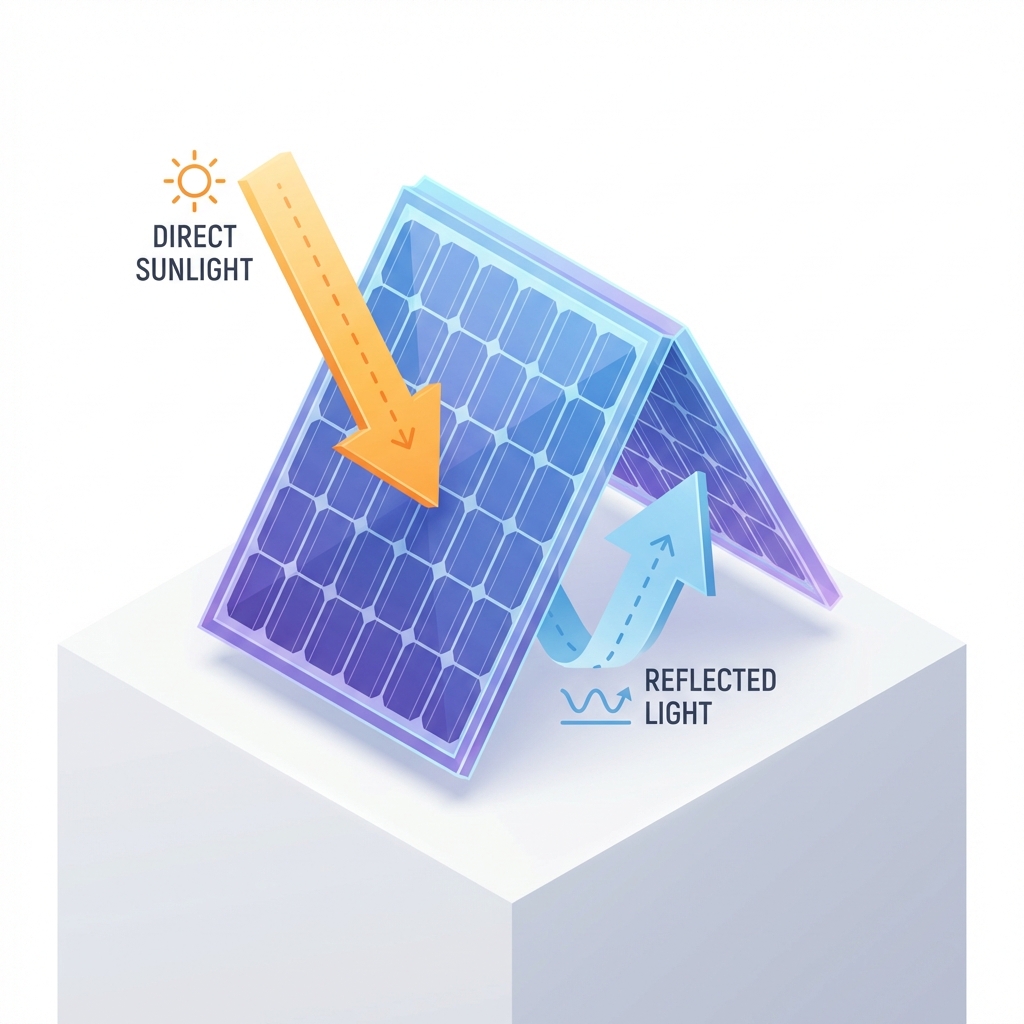
Works especially well if you have:
- White or light-coloured roof
- Concrete terrace
- Open area around panels
✓ Pros
- •10-30% more electricity generated
- •Better performance on cloudy days
- •Lasts longer (less heat stress)
- •Works great on most Indian rooftops
✗ Cons
- •Slightly higher price (5-10% more)
- •Needs small gap from roof surface
Second: Choose Cell Technology
Now that you've decided on bifacial (good choice!), let's look at what's inside the panel. The "cells" are the blue/black squares that actually convert sunlight to electricity.
Different technologies make these cells work differently. Here are the main options:
Cell Technology: Which One to Choose?
PERC — Previous Generation
PERC was the standard technology until 2023-24. It's decent but now considered outdated.
- Efficiency: Around 20-21%
- Status: Being replaced in 2026
- Our take: Avoid unless very tight budget
TOPCon — Best Value in 2026
TOPCon is the current best technology for home solar. It's more efficient, handles heat better, and doesn't lose power as quickly over the years.
- Efficiency: 23-24%
- Heat performance: Excellent (important for India)
- Lifespan: Very low degradation over 25+ years
- Price: Slightly more than PERC, but worth it
HJT — Premium Option
HJT offers the highest efficiency (24-26%) and best heat performance. But it costs significantly more.
- Best for: Very limited roof space
- Downside: Higher cost, less common in India
- Our take: Consider only if space is very tight
Quick Comparison
| Feature | PERC | TOPCon | HJT |
|---|---|---|---|
| Efficiency | 20-21% | 23-24% | 24-26% |
| Heat Performance | Average | Good | Excellent |
| Price | ₹ | ₹₹ | ₹₹₹ |
| Our Recommendation | ❌ Avoid | ✅ Best Choice | ⚪ If budget allows |
SolarWire Recommendation
What We Install for Our Customers
For homes across India, we recommend and install TOPCon Bifacial panels. Simple reason: best power output for your money.
- ✓Highest efficiency (23-24%)
- ✓Works well in Indian summer heat
- ✓Lasts 25+ years with minimal power loss
- ✓Best value for money
Every roof is different. If you have special requirements like very limited space, extreme heat conditions, or a tight budget, we'll find the right panel for you.
Next Steps
Now you know which panel to choose: TOPCon Bifacial is the best option for most Indian homes.
Next, you need to pick the right inverter. Read our guide to choosing solar inverters to complete your knowledge.
Ready to see how much you can save? Use our free calculator to get an instant estimate based on your electricity bill.
→ Calculate Your Solar Savings
Have questions? Our team is happy to help. Book a free consultation and we'll guide you through the entire process.